Countertop Installation in Austin, TX

Notes on countertop installation in Austin, TX: tear-out, cabinet levelling on clay soil, overhang support, sink hookups, backsplash timing and early care.

What We Cover

Countertop Installation in Austin, TX

Installation day in an Austin kitchen starts well before the new top arrives. The crew shuts off the water, frees the old top from its caulk and screws, and carries it out without scarring the cabinets or the walls. What the cabinets look like underneath decides the rest of the day, because a stone slab is only as good as the base it sits on.

The base under the stone

East of the Balcones Fault the ground is clay that swells and shrinks, and houses in Mueller, Hyde Park and along Shoal Creek move with it. Cabinet runs that were level when built can drift, so installers sight along the tops with a long level or a laser line and shim up to the highest point. Granite, quartz and quartzite do not flex, so the cabinets get corrected first and the stone goes on second.

Islands, overhangs and sinks

A seating overhang needs support that nobody sees once the job is finished: steel brackets, plywood backing, a leg or a corbel. A sink cutout has its own rules, since the undermount sink is glued to the stone before the slab is set. The order of hookups follows from that: sink, slab, faucet, drain, disposal, and the dishwasher last.

Backsplash and the first weeks

The backsplash waits for the top, and the tile waits for the adhesive. Long hot summers speed up some cures and humidity near Lady Bird Lake slows others, so the schedule bends with the weather. After install, the sealer, the silicone and the epoxy at the seams need a few days of gentle use before the kitchen goes back to full work.

Guides

The pages here walk through tear-out, levelling cabinets on clay soil, supporting islands and overhangs, the order of sink and faucet hookups, backsplash timing and the care of a new top in Austin, TX. Each one covers a single stage of the job in plain terms.

Latest Guides

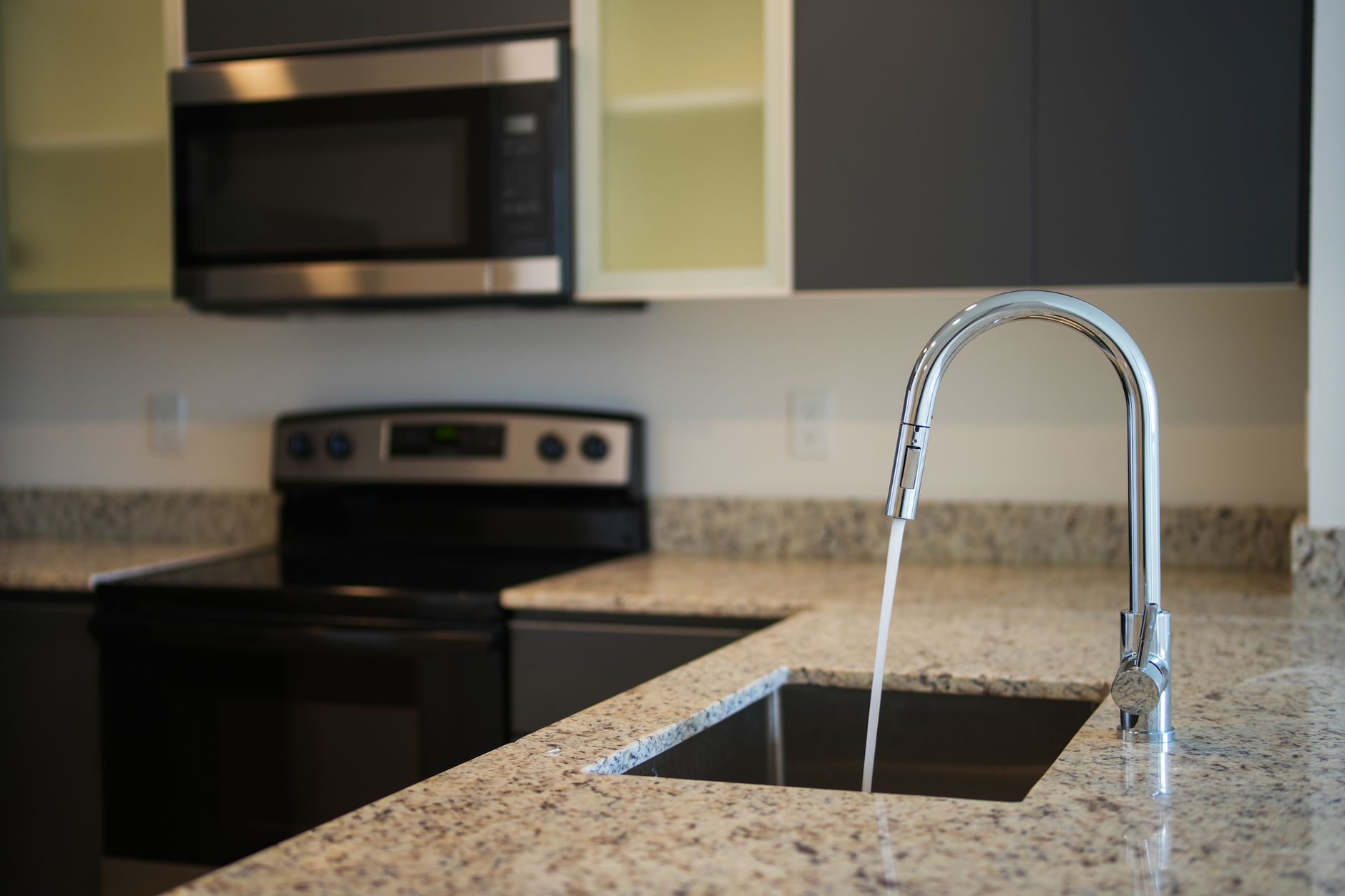
A sleek kitchen faucet on a granite countertop with modern appliances in view in Austin, TX

Choosing a Countertop Material for an Austin Kitchen That Runs Hot

2026-10-06

Austin kitchens work harder than the weather forecast suggests. The summers are long and hot, the air conditioner runs for months, and a kitchen with a west window can see direct afternoon sun on the countertop for hours. Add pots from the stove, a lot of outdoor cooking that gets carried inside, and a household that entertains on a Friday night, and the material under the elbows matters more than its colour in a showroom. This article compares the common choices by what they do in a hot, sunny, hard-water city, using what installers see on the job.

What does heat actually do to a countertop?

Heat acts on a countertop in two ways. A hot pan sets down on the surface and puts a sharp local temperature jump into the material. Sunlight through a window warms a strip of the top for hours, day after day, through the long Texas summer. Stone handles the first better than it handles the second in some cases, and resin-based materials handle neither as well as stone does.

Thermal shock is the usual failure with stone. A cold slab with a very hot pan set down near a seam or a cutout can crack from that point, because those spots already carry stress. Sun is different. It rarely cracks anything, but it can fade a few materials over years and it makes a dark top too hot to rest a forearm on at four in the afternoon.

How do the main materials compare?

MaterialHeat from potsSun and fadingHard waterUpkeep
GraniteVery tolerant, use a trivet near seamsNo fadingShows white rings if left to drySealed once in a while
QuartzResin can mark from a direct hot panCan yellow slowly in strong sunWipes cleanNo sealing
QuartziteVery tolerantNo fadingRings possibleSealed
MarbleTolerant, but etches from acidNo fadingDulls with mineral crustSealed, honed finish is common
Porcelain slabExcellentNo fadingWipes cleanNo sealing, edges can chip
Butcher blockScorchesDarkens or bleachesSwells near the sinkOiled regularly
LaminateScorches and blistersCan fadeEdges swell if water sitsLittle, but not repairable

Nothing in the table is a ranking. A household that cooks heavy on the stove and never uses a trivet has a different answer from a household that bakes once a month.

Is granite still the safe answer in Austin?

Granite is the material most installers talk about first, and for good reasons. It tolerates heat, it does not fade, and the surface hides a lot of daily wear. Granite quarried and fabricated for local kitchens is usually sold as a slab with a polished or leathered finish, and an eased edge or a bullnose is a standard cut that most fabricators handle without special tooling.

Two things trip people up. Some granites are more porous than they look, especially lighter colours with a lot of movement, and they stain from oil if the sealer is thin. Granite also has seams in most kitchens, because a slab is rarely wide enough to cover an L-shaped run without a join. Seam placement is a choice, not an accident. A seam in the middle of the longest straight run is usually less visible than one close to the sink, and the installer sets it where the cabinet joint falls.

Where does quartz run into trouble?

Quartz is engineered stone: crushed quartz bound with resin. The surface is consistent, needs no sealing and resists stains well. In a hot, sunny kitchen the resin is the weak point. A pan straight off the burner can leave a pale or glossy mark, and a kitchen with unfiltered afternoon sun on one section of the top may show a slight colour shift between that strip and the shaded part, mostly in lighter colours.

That does not rule quartz out. It means a trivet by the stove stops being optional, and a kitchen with a big west window may want a blind or a low-e film. Installers in Austin often see quartz in kitchens that open to a patio, and the people who are happiest with it are the ones who treat the stove side with the same care they would give a wooden table.

What is the case for quartzite and porcelain?

Quartzite is natural stone that is harder than most granite. It handles heat and sun, and it looks a lot like marble, which is why it sells. The catch is that it is dense and sometimes difficult to cut, so the fabricator spends longer on the sink cutout and the edge profile. A slab with a visible vein needs careful layout so the pattern runs across a seam without a jump.

Porcelain slabs came into American kitchens later. They are thin, hard, heat proof and untouched by sun, and they are available in large formats, so fewer seams are needed. The weak points are edges and corners, which can chip if the edge profile is a sharp square cut or if a heavy pot is dropped against it. A mitred edge hides the thin body, and a waterfall edge shows the pattern running down the side of an island.

What about marble, soapstone and the softer choices?

Marble is a favourite in older Austin houses in Hyde Park and Clarksville, where it suits the period. It etches, which means a drop of lemon juice or vinegar leaves a dull spot, and most marble kitchens settle into a patina. People who accept that are happy. People who want a flawless surface are not.

Soapstone is a quiet exception. It resists acid, handles heat, and darkens with oil over weeks. It scratches easily, but the scratches can be sanded or oiled out. It suits a house where wear is part of the look.

Butcher block and laminate are the two choices that give the least heat protection. A butcher block top is warm and repairable, and it takes a knife, but it needs oiling and it swells if water gets into the end grain near the sink. Laminate is the easiest to tear out and replace, though it scorches, and it cannot be repaired once the surface is cut or blistered.

How does Austin's water change the choice?

City water drawn from the Colorado River system and Lady Bird Lake is hard, and the limestone geology of the region adds calcium. Hard water leaves rings on any surface where it dries. On a polished granite top the rings wipe off with a damp cloth. On honed marble or soapstone they show as a dull crust that needs a gentle cleaner. On quartz and porcelain, the crust is on the surface only and comes off with a soft pad.

A kitchen that gets a lot of hand washing around the sink may want a material that shrugs off water marks, and the faucet position matters as much as the stone. A faucet that sprays toward the back of the top and a backsplash that runs tight to the counter keep the splash zone small.

Does the house change the answer?

It can. A kitchen on a slab foundation on the east side, in the clay soils east of the Balcones Fault, has to deal with a floor that moves. A brittle porcelain slab or a long run of quartzite with few seams puts more stress on a single piece when the cabinets shift. Smaller pieces with planned seams give a little, and the flexible caulk at the wall takes the rest.

A house near Tarrytown or Travis Heights with older plumbing and older cabinets may need the cabinets rebuilt before any heavy stone goes on, and that changes which materials make sense. Stone is heavy. A kitchen with an island that has no steel in its frame is not a candidate for a long waterfall edge without reinforcement.

How should a household decide?

The decision rests on three questions. How often does the stove side take a hot pan directly? How much direct sun reaches the top? And how much does a patina bother the people who live there? Answer those honestly and one or two materials usually rise above the others.

A kitchen on a quiet street off Congress Avenue that sits mostly shaded and cooks gently can use almost anything. A kitchen with a south and west exposure that sees heavy daily cooking is better served by granite, quartzite or porcelain. The material that photographs well on the showroom floor is not always the one that holds up through an Austin August.

Choose the material for the heat and the sun first, then pick the colour.
Read more →

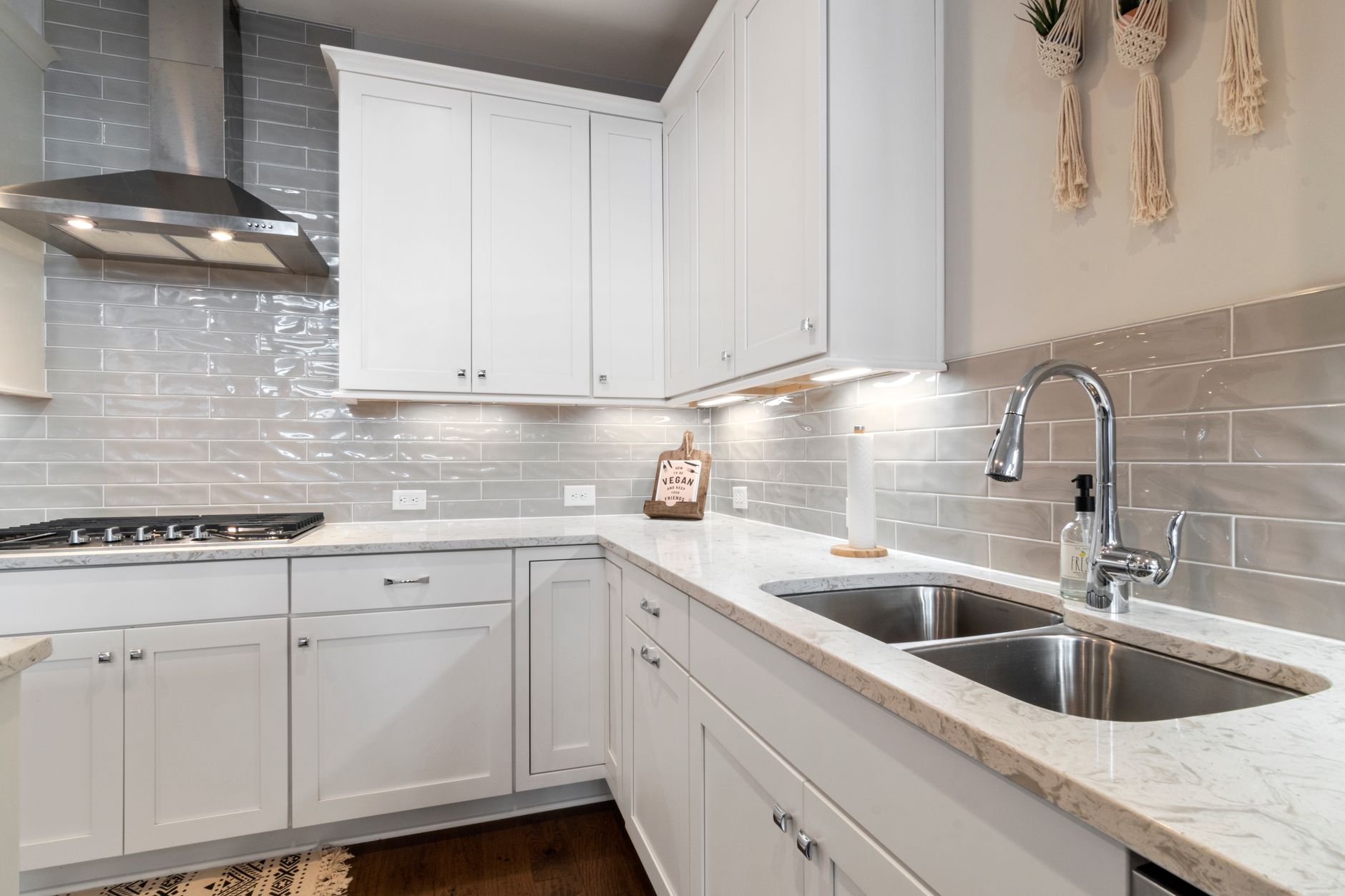
Sleek white kitchen with marble countertops and modern fixtures in Austin, TX

Getting an Austin Kitchen Ready for Countertop Install Day

2026-10-06

A countertop job turns a working kitchen into a work site for a day or two, and most of the stress comes from surprises that could have been settled the week before. Homeowners in Austin ask the same dozen questions again and again, and the answers are mostly practical: what to clear, where the crew parks, how long the water is off, and what the house should look like when the template visit and the install day arrive. The answers below follow the order of a typical job.

How far ahead should the kitchen be cleared?

The day before the template visit is not too early. The installer needs to see the full length of the old top, the wall behind it and the inside of the sink base. That means the countertop appliances come off, the drawers closest to the sink are emptied, and the cabinet under the sink is cleared so the crew can reach the shut-off valves and the drain.

For install day, the whole top must be clear and the cabinets must be accessible. Dishes and small appliances move to a table in another room. A good habit is to pack one box with what the household needs for breakfast and one with what it needs for dinner, so nobody digs through the kitchen while the crew works.

What happens at the template visit?

The template visit is when the installer measures what will be cut. Many shops use a digital template: a laser or a camera maps the cabinet tops, the walls and the edges, and the data goes straight to the saw. Others still use thin wood strips or paper patterns. Either way, the visit is for confirming the layout, the seam placement, the sink cutout and the position of the cooktop or range.

The homeowner should have the sink and faucet on site for this visit. The cutout is traced from the real sink, not from a catalogue sheet, and a faucet with three holes needs a different drilling pattern from a faucet with one. If the cooktop has not been bought yet, the installer cannot cut for it, and the job waits.

Who disconnects the sink and appliances?

It depends on the shop, and the question belongs at the first visit. Some crews disconnect and reconnect the sink, the faucet and the disposal as part of the job. Others expect a plumber to do it. Gas cooktops almost always need a licensed plumber or gas fitter, and electric ranges often need an electrician if the connection has to move.

A dishwasher is a common surprise. It sits under the countertop, and a new, thicker slab can leave less clearance than the old laminate did. The installer checks the height at the template visit, and if the machine will not slide back in, it needs to be raised on its feet or the cabinet floor needs a small change.

How long is the kitchen out of use?

Tear-out and install usually happen on one day for a standard kitchen, with the template visit a week or more earlier and fabrication in between. A large island or a complicated run with several seams can stretch the work over two days. The sink may be unusable for the working hours and a short time after, while the silicone around an undermount sink sets.

The cooking schedule matters more than the sink. A household that cannot go without a stove for a day should plan for a cooler, a grill on the patio or a few meals out. The backsplash comes later, so a stretch of bare wall behind the new top is normal for a few days.

What should be done about dust and mess?

Stone is cut at the shop, not in the kitchen, so most dust is from tear-out. The crew protects the floor with paper or boards and covers nearby cabinets. Some on-site cutting does happen, typically small adjustments to a sink cutout or a notch for a tap, and the saw is run with water to hold down dust.

A few household steps help. Close the doors to rooms the crew does not need. Cover furniture next to the kitchen with sheets. If anyone in the house has a breathing condition, plan for the day to be spent somewhere else. Pets are better out of the house or in a closed room, since open doors and heavy slabs do not mix.

What about access, parking and the slab itself?

Slabs are heavy and awkward. A path from the truck to the kitchen needs to be clear of toys, plants and loose rugs, and the doors along that path need to open wide. Houses in Hyde Park and Clarksville often have narrow porches and tight turns, and a slab that will not turn the corner is better discovered at the template visit than on install day.

Parking is the other detail. A truck with a slab rack is long, and on a narrow street near Congress Avenue or a dense block around the University of Texas it may need to stop in a spot the homeowner can reserve. A call to a neighbour the day before can prevent an awkward hour.

Can the old top be reused or kept?

In most cases it cannot. Granite and quartz tops that are lifted off in one piece can be reused in a garage or outdoor kitchen, but the cutouts rarely match another layout. Laminate is thrown out. Butcher block can be refinished and used as a shelf or a bar top.

The crew will haul off what the household does not want, and the answer to that question belongs on the order, not on install day.

What is checked before the crew leaves?

The walkthrough is the homeowner's chance to look at the work. Run a hand along each seam and the edge profile. Look at the top from a low angle with a light across it, since that is when any unevenness shows. Open the faucet and watch the drain. Look under the sink for drips.

A seam is visible in any stone top, but it should be tight, level and close in colour. A seam that leaves a ridge a fingernail can catch is a flaw and a reason to ask the crew to correct it before they go.

What should be left alone afterwards?

A new top is in its curing period for the first days. Silicone, epoxy and sealer are still setting. Avoid heavy appliances on a seam, hot pans near cutouts and harsh cleaners. A damp cloth and mild soap is enough in the first week, and the homeowner can give the top a wipe after every use, so hard water does not leave rings around the faucet.

In Austin, the first summer matters. A house that has been cooled to a steady temperature and then opened up for a party swings in air and humidity, and a house on east side clay moves a little with the seasons. A hairline gap at the backsplash caulk in the first few months is common and is closed with a bead of flexible caulk. A crack in the stone is not, and it deserves a call to the installer with photos.

What is worth writing down before install day?

A short list saves trouble: the sink and faucet model, the cooktop or range model, the height of the dishwasher opening, the edge profile, the seam positions agreed at the template, the plan for haul-off and the name of whoever does the plumbing. With that list in hand, install day is a routine job.

Read more →