Choosing a Countertop Material for an Austin Kitchen That Runs Hot
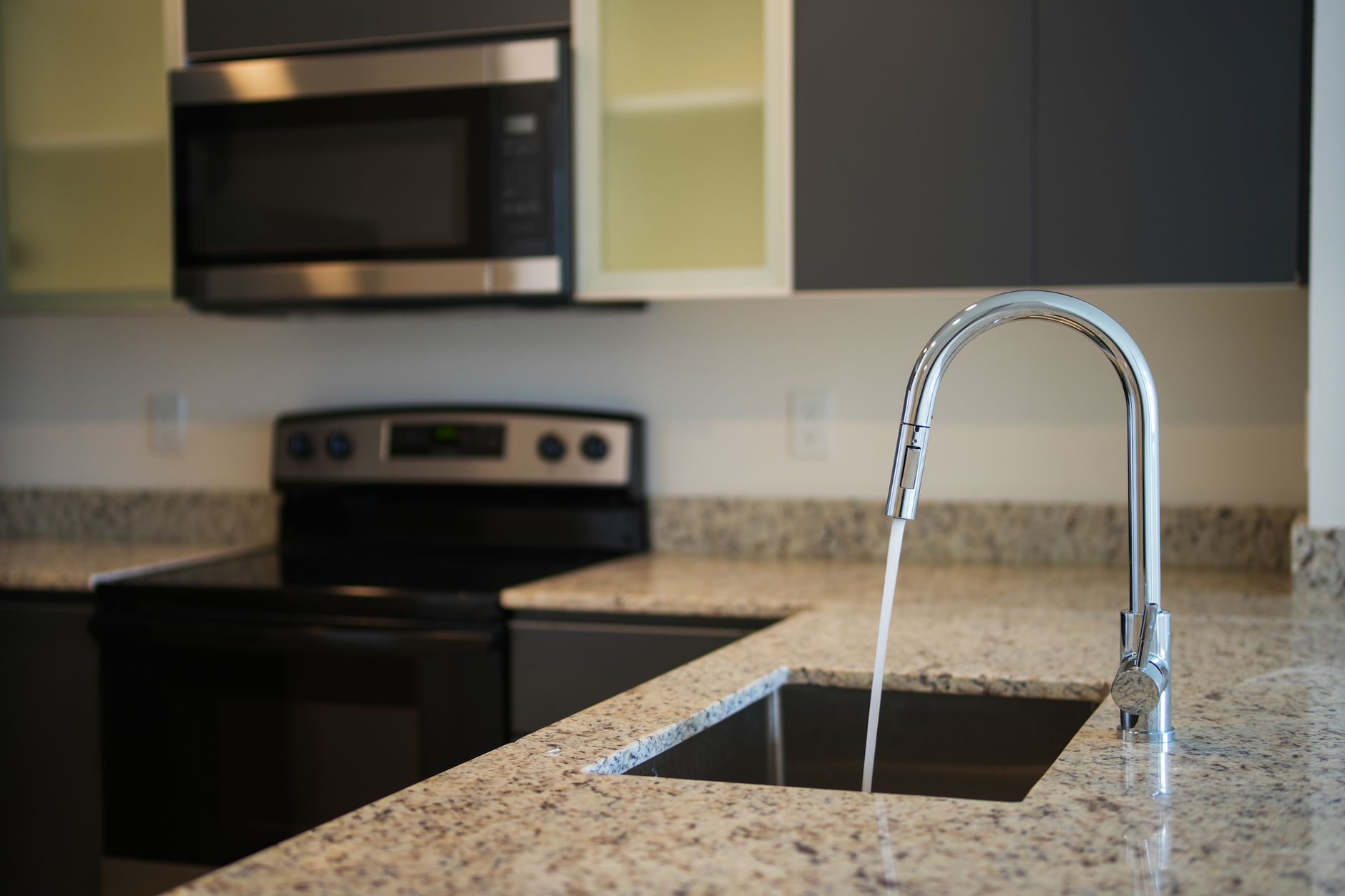
Austin kitchens work harder than the weather forecast suggests. The summers are long and hot, the air conditioner runs for months, and a kitchen with a west window can see direct afternoon sun on the countertop for hours. Add pots from the stove, a lot of outdoor cooking that gets carried inside, and a household that entertains on a Friday night, and the material under the elbows matters more than its colour in a showroom. This article compares the common choices by what they do in a hot, sunny, hard-water city, using what installers see on the job.
What does heat actually do to a countertop?
Heat acts on a countertop in two ways. A hot pan sets down on the surface and puts a sharp local temperature jump into the material. Sunlight through a window warms a strip of the top for hours, day after day, through the long Texas summer. Stone handles the first better than it handles the second in some cases, and resin-based materials handle neither as well as stone does.
Thermal shock is the usual failure with stone. A cold slab with a very hot pan set down near a seam or a cutout can crack from that point, because those spots already carry stress. Sun is different. It rarely cracks anything, but it can fade a few materials over years and it makes a dark top too hot to rest a forearm on at four in the afternoon.
How do the main materials compare?
| Material | Heat from pots | Sun and fading | Hard water | Upkeep |
|---|---|---|---|---|
| Granite | Very tolerant, use a trivet near seams | No fading | Shows white rings if left to dry | Sealed once in a while |
| Quartz | Resin can mark from a direct hot pan | Can yellow slowly in strong sun | Wipes clean | No sealing |
| Quartzite | Very tolerant | No fading | Rings possible | Sealed |
| Marble | Tolerant, but etches from acid | No fading | Dulls with mineral crust | Sealed, honed finish is common |
| Porcelain slab | Excellent | No fading | Wipes clean | No sealing, edges can chip |
| Butcher block | Scorches | Darkens or bleaches | Swells near the sink | Oiled regularly |
| Laminate | Scorches and blisters | Can fade | Edges swell if water sits | Little, but not repairable |
Nothing in the table is a ranking. A household that cooks heavy on the stove and never uses a trivet has a different answer from a household that bakes once a month.
Is granite still the safe answer in Austin?
Granite is the material most installers talk about first, and for good reasons. It tolerates heat, it does not fade, and the surface hides a lot of daily wear. Granite quarried and fabricated for local kitchens is usually sold as a slab with a polished or leathered finish, and an eased edge or a bullnose is a standard cut that most fabricators handle without special tooling.
Two things trip people up. Some granites are more porous than they look, especially lighter colours with a lot of movement, and they stain from oil if the sealer is thin. Granite also has seams in most kitchens, because a slab is rarely wide enough to cover an L-shaped run without a join. Seam placement is a choice, not an accident. A seam in the middle of the longest straight run is usually less visible than one close to the sink, and the installer sets it where the cabinet joint falls.
Where does quartz run into trouble?
Quartz is engineered stone: crushed quartz bound with resin. The surface is consistent, needs no sealing and resists stains well. In a hot, sunny kitchen the resin is the weak point. A pan straight off the burner can leave a pale or glossy mark, and a kitchen with unfiltered afternoon sun on one section of the top may show a slight colour shift between that strip and the shaded part, mostly in lighter colours.
That does not rule quartz out. It means a trivet by the stove stops being optional, and a kitchen with a big west window may want a blind or a low-e film. Installers in Austin often see quartz in kitchens that open to a patio, and the people who are happiest with it are the ones who treat the stove side with the same care they would give a wooden table.
What is the case for quartzite and porcelain?
Quartzite is natural stone that is harder than most granite. It handles heat and sun, and it looks a lot like marble, which is why it sells. The catch is that it is dense and sometimes difficult to cut, so the fabricator spends longer on the sink cutout and the edge profile. A slab with a visible vein needs careful layout so the pattern runs across a seam without a jump.
Porcelain slabs came into American kitchens later. They are thin, hard, heat proof and untouched by sun, and they are available in large formats, so fewer seams are needed. The weak points are edges and corners, which can chip if the edge profile is a sharp square cut or if a heavy pot is dropped against it. A mitred edge hides the thin body, and a waterfall edge shows the pattern running down the side of an island.
What about marble, soapstone and the softer choices?
Marble is a favourite in older Austin houses in Hyde Park and Clarksville, where it suits the period. It etches, which means a drop of lemon juice or vinegar leaves a dull spot, and most marble kitchens settle into a patina. People who accept that are happy. People who want a flawless surface are not.
Soapstone is a quiet exception. It resists acid, handles heat, and darkens with oil over weeks. It scratches easily, but the scratches can be sanded or oiled out. It suits a house where wear is part of the look.
Butcher block and laminate are the two choices that give the least heat protection. A butcher block top is warm and repairable, and it takes a knife, but it needs oiling and it swells if water gets into the end grain near the sink. Laminate is the easiest to tear out and replace, though it scorches, and it cannot be repaired once the surface is cut or blistered.
How does Austin's water change the choice?
City water drawn from the Colorado River system and Lady Bird Lake is hard, and the limestone geology of the region adds calcium. Hard water leaves rings on any surface where it dries. On a polished granite top the rings wipe off with a damp cloth. On honed marble or soapstone they show as a dull crust that needs a gentle cleaner. On quartz and porcelain, the crust is on the surface only and comes off with a soft pad.
A kitchen that gets a lot of hand washing around the sink may want a material that shrugs off water marks, and the faucet position matters as much as the stone. A faucet that sprays toward the back of the top and a backsplash that runs tight to the counter keep the splash zone small.
Does the house change the answer?
It can. A kitchen on a slab foundation on the east side, in the clay soils east of the Balcones Fault, has to deal with a floor that moves. A brittle porcelain slab or a long run of quartzite with few seams puts more stress on a single piece when the cabinets shift. Smaller pieces with planned seams give a little, and the flexible caulk at the wall takes the rest.
A house near Tarrytown or Travis Heights with older plumbing and older cabinets may need the cabinets rebuilt before any heavy stone goes on, and that changes which materials make sense. Stone is heavy. A kitchen with an island that has no steel in its frame is not a candidate for a long waterfall edge without reinforcement.
How should a household decide?
The decision rests on three questions. How often does the stove side take a hot pan directly? How much direct sun reaches the top? And how much does a patina bother the people who live there? Answer those honestly and one or two materials usually rise above the others.
A kitchen on a quiet street off Congress Avenue that sits mostly shaded and cooks gently can use almost anything. A kitchen with a south and west exposure that sees heavy daily cooking is better served by granite, quartzite or porcelain. The material that photographs well on the showroom floor is not always the one that holds up through an Austin August.
Choose the material for the heat and the sun first, then pick the colour.